


In response to surging electricity demand from data centers, utilities across the U.S. have rolled out a wave of new large load tariffs that determine how these customers pay for electricity and how the associated infrastructure costs are recovered. As part of E3’s ongoing work on data centers, we have been using Halcyon’s AI-powered Large Load Tariff Tracker, which aggregates and organizes tariff provisions from utilities across the country. In working with that data, we identified an analytical gap: while the tariffs themselves have proliferated quickly, no public analysis has done the math of translating those tariff structures into the actual electricity bills and realized rates a data center would face. E3 undertook this independent, self-funded study to fill that gap, pairing Halcyon’s tariff data with E3’s own modeling and analytics to examine how these tariffs translate into actual electricity bills for large customers and how costs differ across regions and rate designs.
Utilities rely on tariffs to allocate the cost of new infrastructure while protecting existing customers from cost shifts. At the same time, large customers (like data centers) need predictable and understandable cost structures when evaluating where to locate new facilities. These tariffs often include mechanisms such as contract demand requirements, minimum billing provisions, and ramp-up schedules that link assumed load growth to infrastructure investment. The challenge is that tariff designs differ widely across utilities and markets, making them difficult for customers to compare.
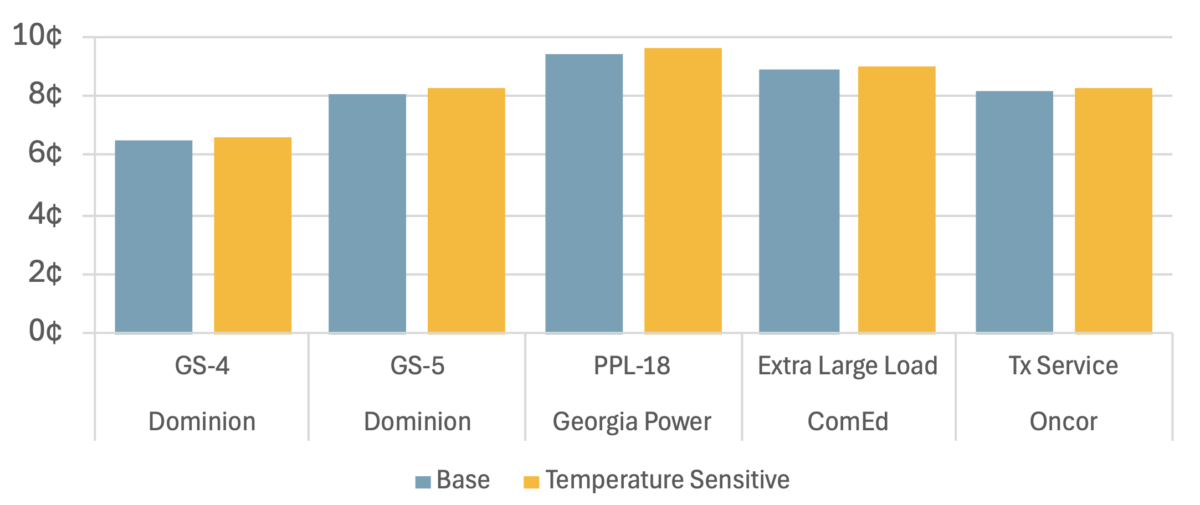
E3’s study evaluates how different tariff structures translate into annual electricity costs under realistic operating conditions. The analysis focuses on five representative tariffs that are currently in effect or recently approved: Dominion Energy Virginia’s GS-4 and GS-5 tariffs, Georgia Power’s PLL-18 tariff, Commonwealth Edison’s Extra Large Load delivery class, and Oncor’s transmission service tariff in Texas. To enable consistent comparison, E3 modeled electricity bills for a hypothetical 25 MW data center using the same assumptions across all tariffs. Two representative load shapes were evaluated: a steady baseline load profile and one that increases demand during warmer months.
Key findings include:
- Large load tariffs vary widely and are evolving rapidly. As utilities respond to new data center demand, tariff structures are diverging across regions and regulatory frameworks, making them difficult for customers to interpret and compare.
- Tariff design can lead to materially different electricity bills even under identical operations. When the same 25 MW data center load profile is applied across different tariffs, the resulting annual costs vary significantly.
- Differences in customer charges, demand charges, and energy charges drive much of the variation in total bills. Some tariffs emphasize peak demand charges, while others rely more heavily on energy charges tied to total consumption.
- Minimum billing provisions and ramp-up requirements can affect early-year costs. Tariffs with contract demand requirements or ramp-up schedules can lead to higher costs during the initial years of operation when facilities may not yet be running at full capacity.
- Market structure also influences customer exposure to price risk. In deregulated markets such as Illinois and Texas, customers may face greater exposure to wholesale market prices compared with vertically integrated utility territories.
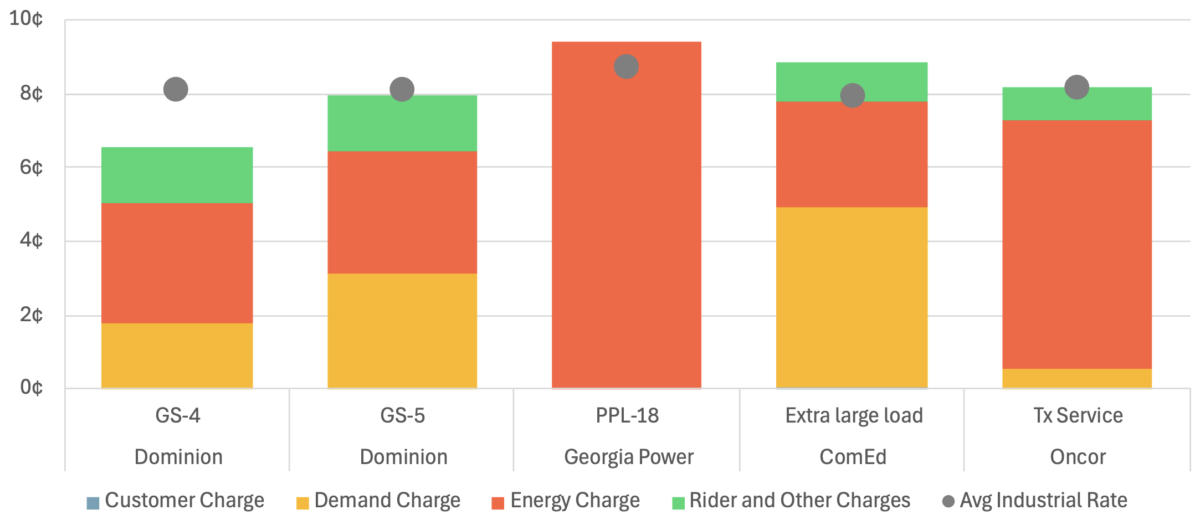
To help address the complexity of comparing tariffs, the study introduces a standardized benchmarking framework that translates diverse tariff designs into comparable cost and risk metrics. The framework focuses on bill-based metrics such as annual electricity costs and average demand and energy charges, alongside structural elements like minimum contract terms and ramp-up requirements. By translating tariff structures into a consistent set of indicators, the framework makes it easier to see how design choices affect customer costs and risk exposure across utilities and regions.
Download the paper >
As large electricity loads continue to grow, tariffs will remain a central tool for managing new demand. The analysis shows that even under identical operating conditions, electricity costs can vary substantially depending on how rates are designed and how risk is allocated. A consistent benchmarking approach can help bring clarity to these comparisons as utilities, customers, and regulators navigate a rapidly evolving electricity landscape.
To learn more about E3’s work on data centers, please contact kushal.patel@ethree.com.
