
 Illinois Commerce Commission Releases Gas Decarbonization Pathways Study Supported by E3
The Illinois Commerce Commission (ICC) Staff, supported by E3, has released the Gas Decarbonization Pathways…
 How Often Is Demand Response Called? E3 Examines DR Usage in MISO and PJM
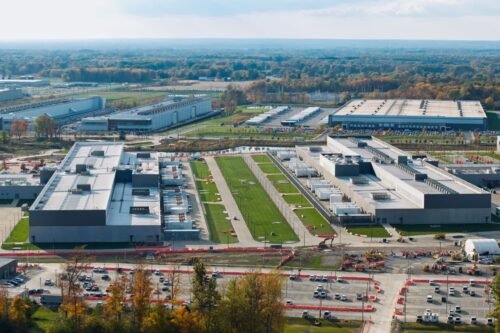
Rapid load growth has turned attention to demand response (DR) and other flexible loads as…
 E3 Releases 2026 Second Edition Market Price Forecasts on the New E3 Forecast Portal
E3 has released the Second Edition of its 2026 Core Case Electricity Market Price Forecasts…
 What Developers and Host Communities Want from Clean Energy Property Tax Policy
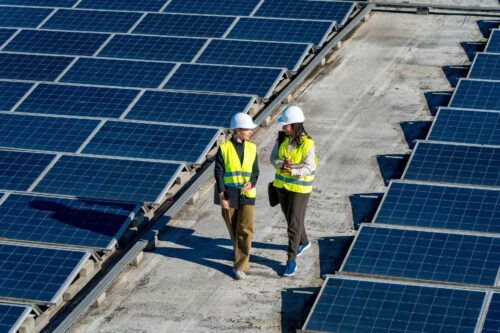
Local permitting barriers driven by community opposition have made constructing utility-scale wind and solar projects…
 Climate Change and Resource Adequacy in the West, a new E3 study
Long-term electricity planning in the West still relies largely on historical weather data. Yet climate…
 E3 Testifies on PJM’s Evaluation of Market Efficiency Transmission Projects
The Pennsylvania Public Utility Commission (PA PUC) has asked FERC to change how PJM evaluates…

Integrated System Planning
E3 is a leader in cutting-edge electricity planning practices. We support utilities, regulators, and system operators in developing integrated resource plans, capacity expansion studies, and the integrated system planning processes that holistically connect generation, transmission, distribution, and customer resources.

Energy and Climate Policy
E3 provides independent analysis to support climate program design, carbon pricing, and clean energy standards. Our economy-wide PATHWAYS model has informed major state climate plans, including California's Scoping Plan and New York's Climate Act, and federal policy analysis for the IRA and CAA Section 111.

Resource Adequacy and Reliability
E3 develops resource adequacy frameworks that capture the realities of high-renewable systems, including weather-driven variability, ELCC, and stress-test conditions. Our RECAP tool runs time-sequential simulations across thousands of modeled years to calculate reliability metrics and the capacity value of individual resources.

Data Centers and Large Loads
E3 helps clients answer every question that large load growth raises. We forecast data center and industrial demand, model the resources needed to serve it, and analyze who ends up paying for the infrastructure. We also design the tariffs, contracts, and risk protections that new large customers require, and we advise on siting, often in diligence contexts, grid interconnection, and power procurement including clean energy, emerging technologies, and on-site generation options. interconnection Our clients include utilities, regulators, state and local governments, hyperscalers, and data center developers.

Market Advisory and Valuation
E3 values energy assets with a focus on power, renewables, and utilities. We primarily advise investors, financiers, project developers, and utilities on transactions. We forecast the revenue an asset will earn, value portfolios and companies, and run buy-side and sell-side diligence on generation (renewable and thermal), data centers, energy storage, distributed energy resources, and transmission. Our valuations often rest on the same market fundamentals and price forecasts we develop across North American power markets.

Market Price Forecasting
Fundamentals-based price forecasts for every major North American wholesale power market.

Transportation and Building Electrification
E3 helps utilities, regulators, and large energy users plan and prepare for the electrification of transportation and buildings. We forecast how quickly customers will adopt electric vehicles, heat pumps, and other electric technologies, model what that means for the grid, for costs and emissions, and design the rates and investment plans that support electrification. Our work spans light-duty vehicles to medium- and heavy-duty vehicle fleets and transit customers, as well as single family homes, to large commercial buildings.
Transmission Planning and Development
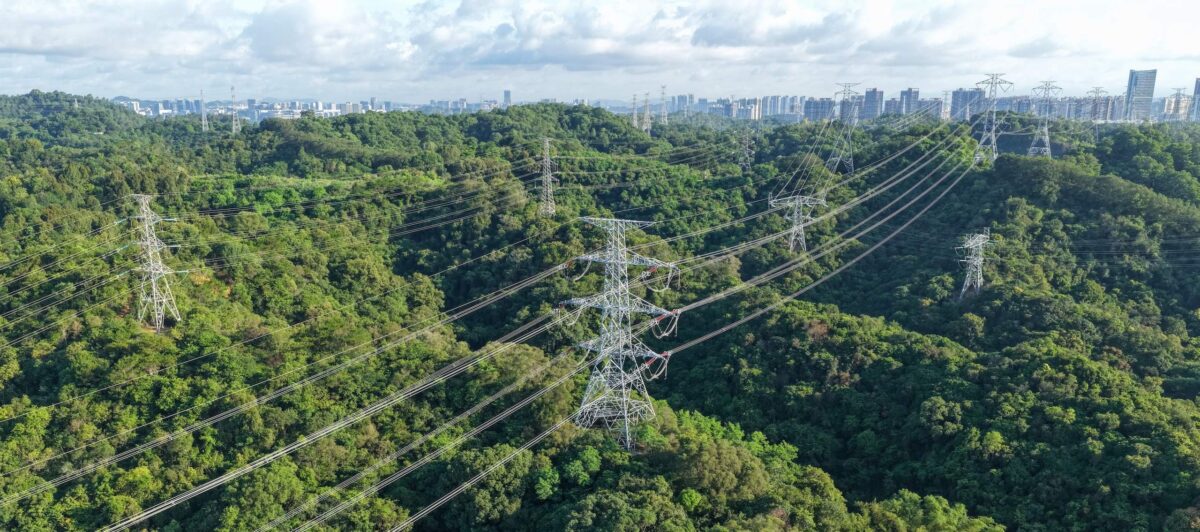
E3 supports clients across the transmission lifecycle. On the planning side, we identify transmission needs that are robust under long-term uncertainty, co-optimize generation and transmission, evaluate conventional transmission solutions alongside advanced transmission technologies and non-wires alternatives, and support FERC Order 1920 compliance. On the development side, we identify promising transmission opportunities, develop competitive transmission bids, structure partnerships and financing for competitive and incumbent projects, advise on siting and permitting, model project risk and cost containment, and design the cost allocation and regulatory pathways that get projects built. We work for utilities, developers, investors, system operators, state agencies, and regulators across North America.

Distributed Energy Resources
E3 analyzes the integration, valuation, and optimization of distributed energy resources, including rooftop solar, storage, EVs, and demand response, to help utilities and regulators design effective DER programs, tariffs, and aggregator frameworks.

Cost of Service and Rate Design
E3 helps regulators, utilities, ratepayer advocates, nonprofits, and large customers keep cost allocation and rate design in step with a changing electricity system. Grounded in economic fundamentals and established regulatory practice, our work includes embedded and marginal cost-of-service studies, financial modeling, time-of-use and dynamic pricing, fixed and demand charge reform, and compensation for distributed energy resources. We provide analysis and expert testimony in contested proceedings on rates that recover costs fairly, send efficient price signals, and support affordability.
Load Forecasting and Customer Adoption
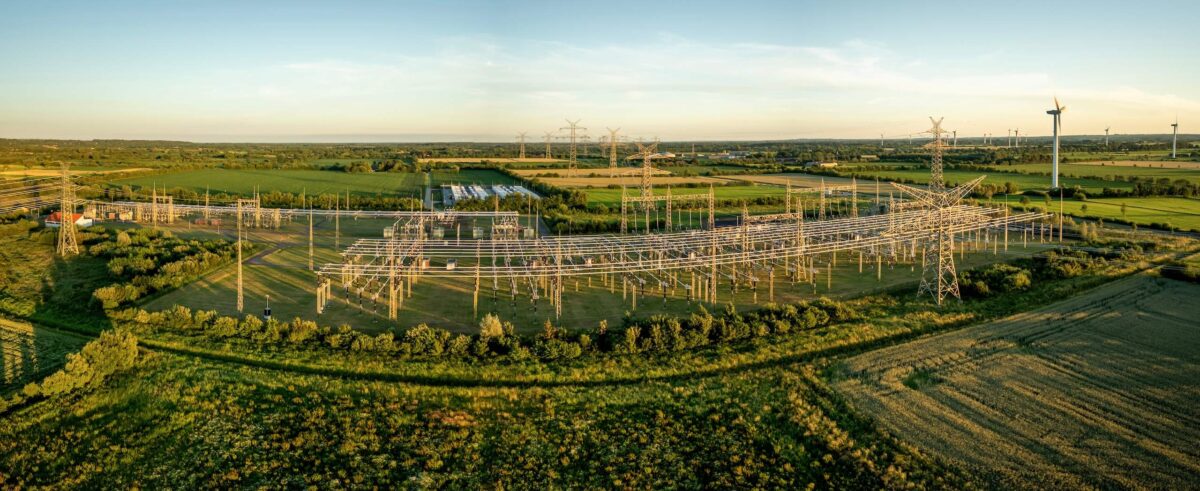
E3 forecasts electricity demand for utilities, regulators, policymakers, and system planners, from the system to adoption of individual technologies through to hourly load on a specific feeder. We project how quickly customers take up electric vehicles, heat pumps, rooftop solar, storage, and efficiency measures, develop the hourly load shapes that go with each, and combine the two into the energy and peak forecasts that feed a resource plan, a state energy plan, a distribution plan, or a rate case. We also forecast new large loads, including data centers and industrial customers, where the drivers are different and the growth arrives in much larger increments.

Distribution Planning and Grid Modernization
E3 supports utilities in developing distribution system plans that address reliability, electrification readiness, DER integration, and cost-effective grid modernization investments aligned with state clean energy goals.

Integrated Gas Planning
E3 supports gas utilities, regulators, and states planning a gas system under emissions policies and changing demand. We support the development of clean heat and greenhouse gas reduction portfolios utilities file with their commissions, evaluate non-pipeline alternatives, support the development of new integrated planning practices, forecast long-run gas demand and identify long-term impacts on revenue requirements and rates.

Resilience, Wildfire, and Asset Health
E3 helps utilities measure wildfire and outage risk, working with utility experts to compose mitigation strategies that prioritize risk reduction within the constraints of limited budgeting and regulatory compliance. We build the risk models that underpin wildfire mitigation plans, compare candidate programs on a consistent basis of risk reduced against cost, and support the filings that carry those plans through a commission. We also value resilience for customers and communities, from what an outage costs to whether microgrids and customer technologies are worth the installation costs.
More info →
Siting and Permiting
We assess state and local permitting processes and develop the ordinances, checklists, and guidance jurisdictions need to evaluate proposed renewable and storage projects. We also analyze the land use, environmental, tax, and community factors that shape siting decisions, so development can move at the pace policy requires while safeguarding environmental quality, public safety, and other community priorities.

Procurement and Bid Evaluation
E3 bridges the gap between resource planning and execution for utilities, states, and large buyers. We design competitive solicitations, establish transparent evaluation protocols, and execute the rigorous modeling needed to that compare diverse portfolios and evaluate project-level performance. Our team supports every stage of procurement, from initial RFP design and bidder management through project selection, contract negotiation, and regulatory filings. We are known for being uniquely suited to assess the value of resources in a procurement setting because we can model that value in a variety of ways, including using our own market price forecasts as well as production cost and capacity expansion models.

Electricity Market Design
Designing and evaluating the market rules that keep a changing resource mix reliable and affordable.

Regulatory Strategy and Litigation Support
E3 consultants serve as expert witnesses before state and provincial commissions, FERC, and in commercial arbitration, on subjects including planning reserve margins and capacity accreditation, market rules and tariffs, cost allocation and rate design, resource plans, procurement decisions, and avoided cost methodologies. Utilities, commission staff, trade associations, developers, and intervenors all retain E3 for this work, because the analysis behind the testimony is independent, transparent, and built to withstand cross-examination.