


On December 15, 2025, the Illinois Power Agency, Illinois Commerce Commission, and Illinois Environmental Protection Agency published the 2025 Resource Adequacy (RA) Study. The study was required by Section 9.15(o) of the Illinois Environmental Protection Act, as amended by the Climate and Equitable Jobs Act, which was signed into law by Governor J.B. Pritzker on September 15, 2021. The report, based on modeling conducted by E3, evaluates the resource adequacy needs of Illinois and the broader regional markets serving the state.
The study finds that both the PJM and MISO markets are resource adequate in 2025 to meet their regional reliability standards. However, resource adequacy in both regions is increasingly challenged by load growth, thermal generator retirements, and the evolving capacity values of conventional, renewable, and storage resources.
The Illinois state legislature mandated that the study look at the state of resource adequacy through 2030. However, because new electric generating and transmission resources have long development timelines, the study evaluates near-term resource adequacy needs through 2035 and longer-term needs through 2045 as demand grows and the resource mix changes. Because the resource adequacy needs of Illinois customers are procured through the PJM and MISO markets, the study evaluates the state of resource adequacy across the footprints of both markets. It also evaluates whether there are sufficient resources and transmission delivery capability to serve the PJM ComEd Zone and MISO Zone 4.
Under baseline conditions, PJM is expected to experience a capacity shortfall beginning in 2029, while MISO sees a shortfall beginning in 2031. These projections assume no acceleration or delays in new resource development or retirements, and only account for resources in active stages of development. These findings highlight the need for additional resource development in both markets to bring new accredited capacity online to meet demand growth. Tight load-resource balance conditions will lead to high capacity prices and elevated loss-of-load risk.
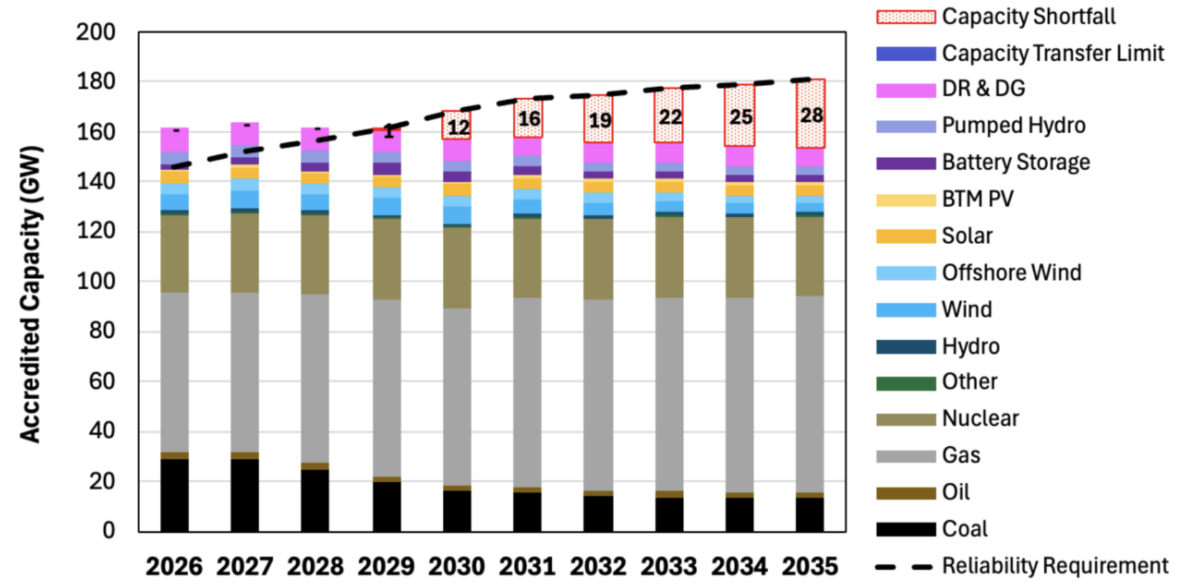
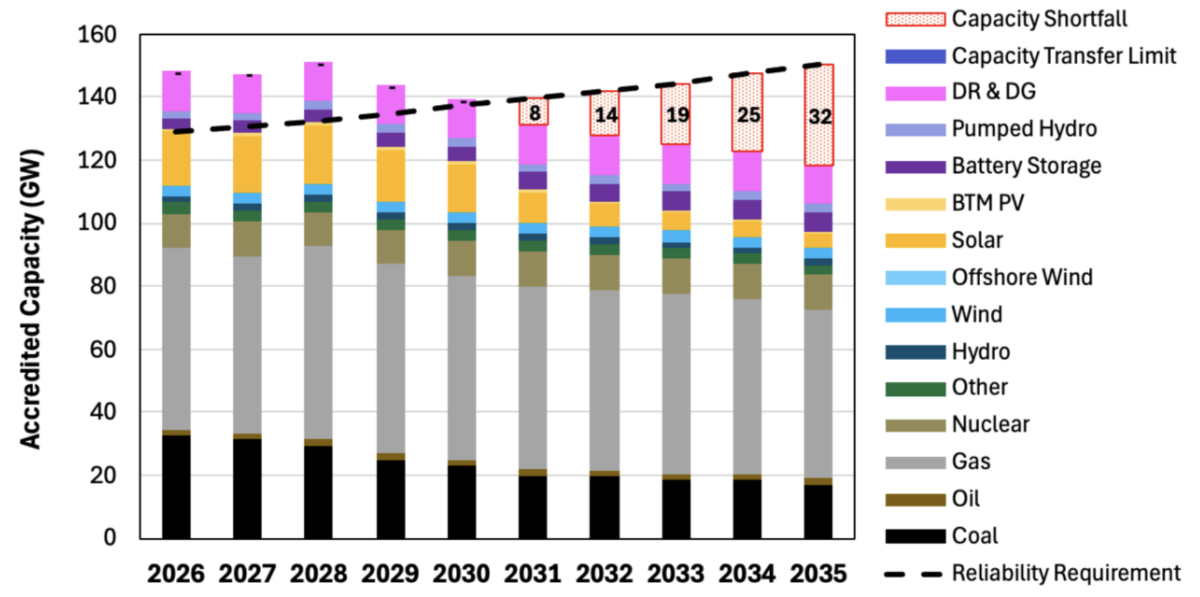
To address these risks, the IPA and IEPA will develop a Mitigation Plan, considering strategies such as renewable energy, energy storage, demand response, and transmission development, as well as considering adjustments to emissions requirements, only to the extent necessary to meet resource adequacy and reliability needs. The Resource Adequacy Study provides the analytical foundation for that next step by identifying the scale, timing, and drivers of potential reliability challenges facing Illinois.
Download the Executive Summary >
All files can be found on IPA’s website here.
