


In 2023, Pasadena City Council set an ambitious goal: to serve 100% of its electricity needs with carbon-free resources by the end of 2030, while optimizing for affordability, reliability, and equity. To help chart this path, Pasadena Water and Power (PWP) partnered with E3 to develop a set of technical studies that form the foundation of the Optimized Strategic Plan (OSP). For more than a year, E3 used advanced power system planning tools, including long-term capacity expansion and loss-of-load probability models, to evaluate multiple pathways to reach the City’s goal.
This work was structured around a series of case studies, each representing a different combination of technologies and local resources optimized for affordability while meeting the City’s carbon-free energy goals and maintaining reliability. The cases presented a range of directions and were used to inform the development of planning targets within the OSP. The OSP emphasized the need to maintain flexibility as the electric system evolves.
Pasadena’s system presents a distinctive planning challenge. The City relies heavily on energy imports through a single transmission interconnection with the broader California grid and so has local generation to maintain reliability during peak demand or during grid contingencies. Physical space for new infrastructure within the city is limited, so distributed solutions rather than more centralized projects play a big role in meeting the city’s local generation needs. These constraints make Pasadena a useful case study in how local conditions shape the clean energy transition.
Drawing on the results of the technical analysis, the plan is organized around five core pillars and two additional foundational elements:
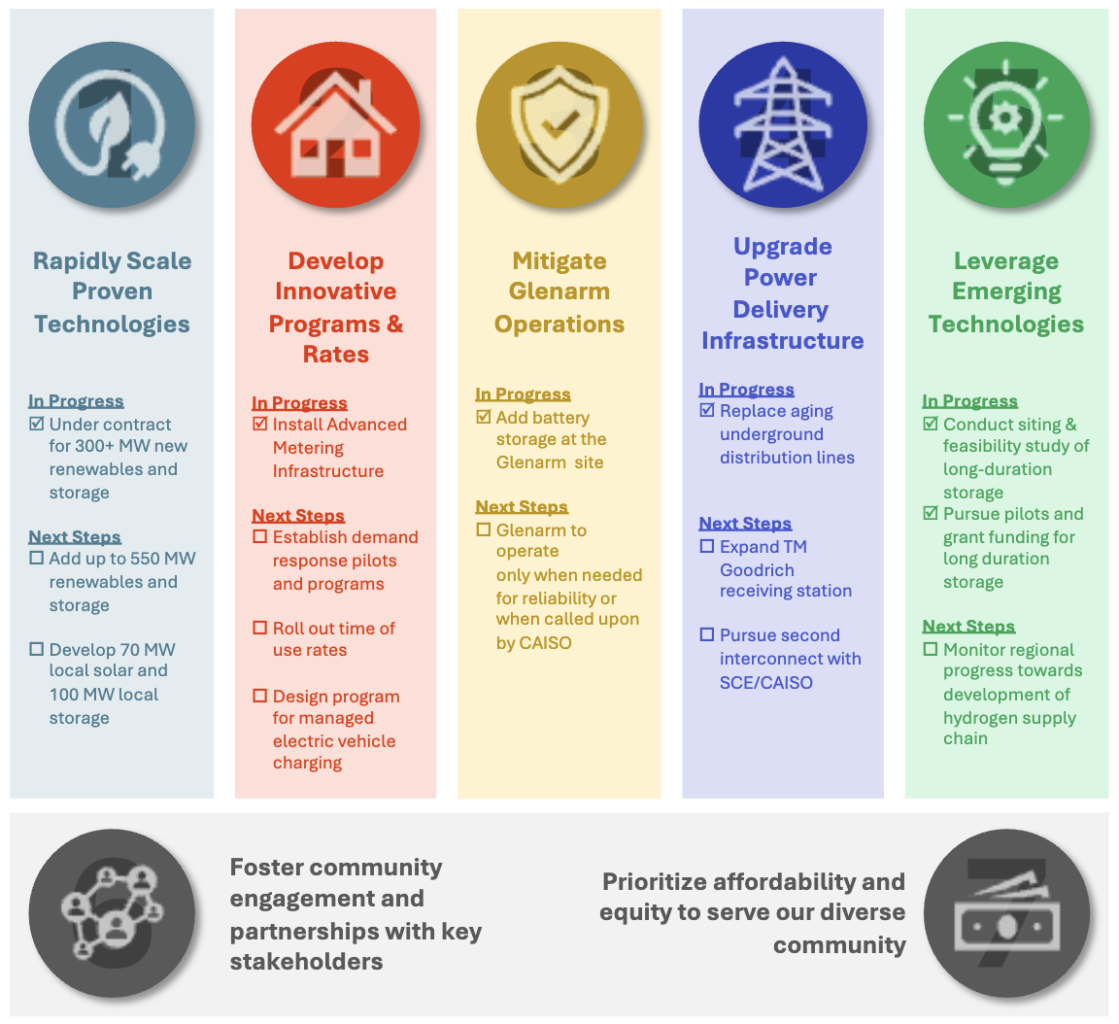
The first pillar is to rapidly scale proven carbon-free technologies. The analysis shows large-scale renewable energy and storage provide the most cost-effective way to reduce carbon emissions. Pasadena has already contracted significant new resources, and further procurement will expand this portfolio, with a diverse mix of solar, wind, geothermal, and battery storage helping to meet demand across different times of day and seasons.
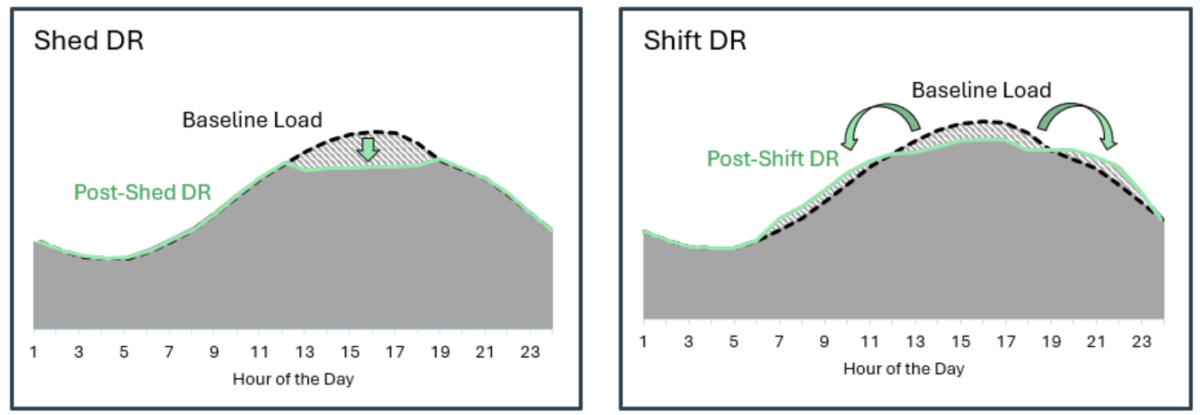
The second pillar focuses on developing innovative programs and rates that leverage customer participation and enable load flexibility. The technical studies highlight substantial potential for demand-side resources, including demand response, flexible building loads, and managed electric vehicle (EV) charging. With advanced metering infrastructure planned for2028, Pasadena will be able to measure and respond to electricity use at much finer time intervals. This will help enable new rate designs, such as time-of-use pricing, that encourage customers to shift consumption to periods when clean energy is more abundant. It also supports more advanced programs, including automated demand response and virtual power plants, where devices like smart thermostats, batteries, and EV chargers respond dynamically to grid conditions.
The studies find that these distributed energy resources (DERs) can play an effective role in system operations. Demand response and managed charging could reduce peak demand, helping avoid new infrastructure and integrate higher levels of renewable energy. However, program effectiveness depends on customer participation, technology adoption, and the ability to measure and verify performance.
The third pillar addresses the role of the Glenarm Power Plant, a natural gas power plant in the City of Pasadena that currently plays a crucial role in maintaining local reliability. While the long-term goal is to eliminate fossil generation, the analysis shows that maintaining local reliability without Glenarm is not currently feasible with available technologies and within existing constraints. The plan retains Glenarm as a limited reliability backstop, with the expectation that it will operate less frequently over time as new resources and programs come online.
The fourth pillar focuses on upgrading power delivery infrastructure. Transmission and distribution investments are essential to enable the transition. Expanding import capability, modernizing aging infrastructure, and deploying advanced metering all support greater access to carbon-free resources and more flexible system operations. These upgrades also improve resilience and reduce reliance on local fossil generation.
The fifth pillar emphasizes monitoring and preparing for emerging technologies. While today’s plan relies primarily on commercially available resources, technologies such as long-duration storage and hydrogen could play a role in the future. The plan positions Pasadena to take advantage of these options as they mature.
Two foundational commitments guide Pasadena’s path to 100% carbon-free electricity including engaging the community through meaningful customer participation and strong partnerships, and ensuring competitive rates that support Pasadena’s long-term economic vitality.
—
The analysis shows that no single solution can deliver a carbon-free system. Pasadena’s path relies on combining multiple strategies across supply, infrastructure, and customer participation, with flexibility to adjust as conditions evolve.
Find the full plan for download here >
To learn more about E3’s work in power system planning, resource portfolio modeling, and reliability analysis, please contact nick@ethree.com.
