

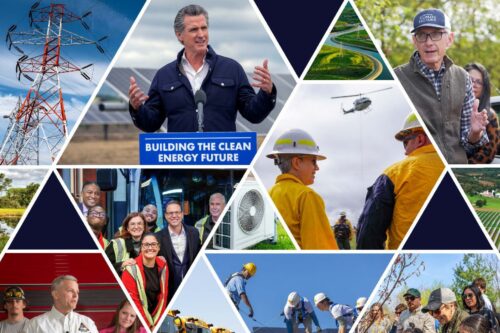
The U.S. Climate Alliance, a bipartisan coalition of governors committed to securing America’s net-zero future, released its 2025 Annual Report, Pressing Forward: Governors’ Enduring Fight for a Resilient and Sustainable Future. The report details how member states are achieving record greenhouse gas (GHG) reductions, driving economic growth, and charting a path forward to save Americans trillions of dollars.
E3 supported the Alliance by providing independent, economy-wide modeling of GHG emissions through 2050 to evaluate progress toward climate goals and to quantify the benefits and costs of achieving net-zero emissions. Using E3’s PATHWAYS model, the analysis examined how federal and state policy shifts — including the Inflation Reduction Act and recent federal rollbacks — affect emissions trajectories, and it identified collective opportunities for further state action.
State Progress and Changing Federal Context
According to the report, Alliance members have collectively reduced net GHG emissions 24% below 2005 levels while growing their economies by 34%, outpacing the rest of the country. This progress puts the coalition within reach of its near-term goal to cut emissions 26% by 2025.
The Alliance’s long-term targets include reducing emissions 50-52% below 2005 levels by 2030, 61-66% by 2035, and achieving net-zero emissions by 2050. E3’s updated modeling reflects that while new federal policies may slow the pace of reductions, Alliance members’ actions continue to drive sustained progress across all sectors, particularly through cleaner electricity generation, building electrification, and zero-emission transportation.
A Path Forward for States
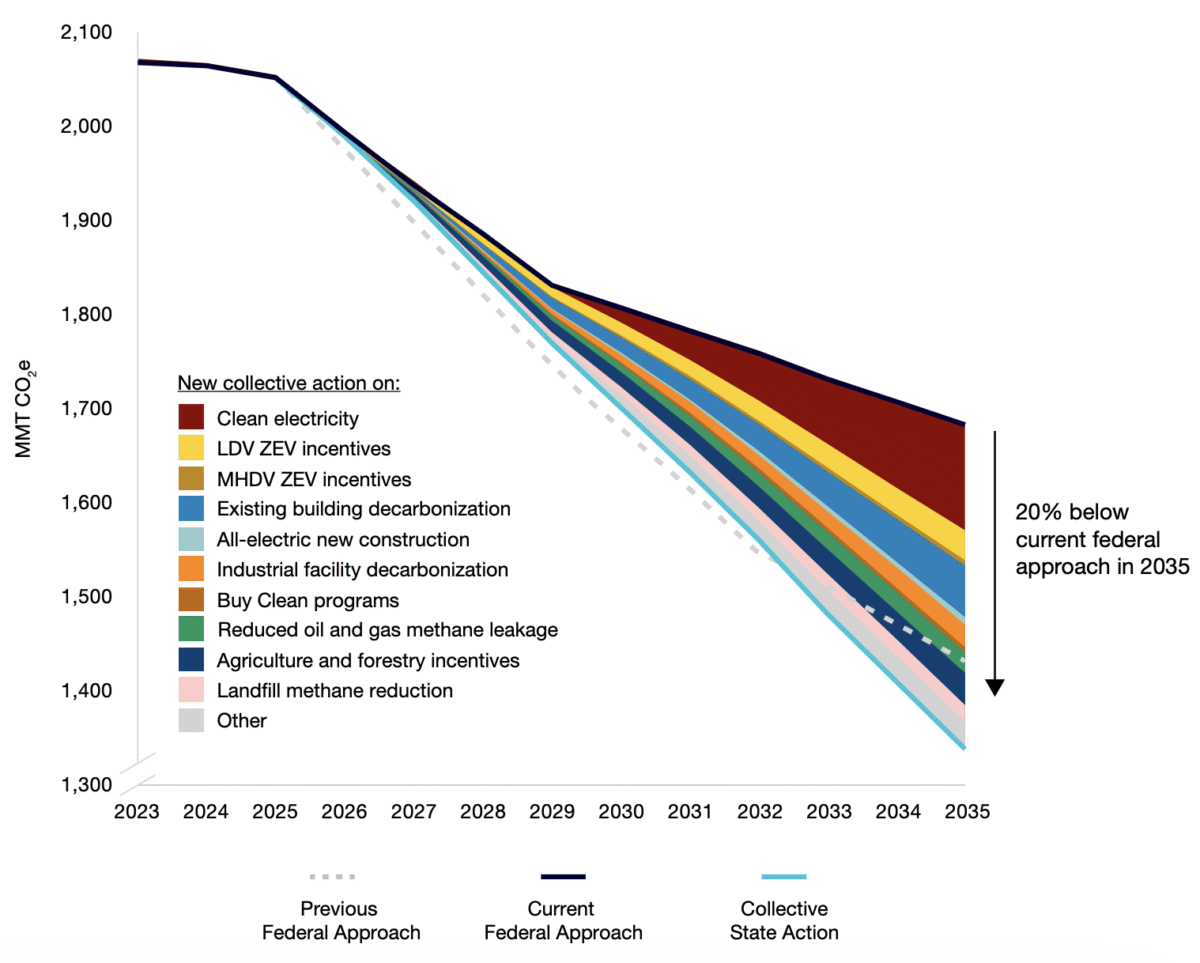
E3’s analysis for the report estimates emissions impacts of Alliance members collectively pursuing additional ambitious near-term actions between now and 2035, based on policies already being implemented or considered in at least one Alliance state or territory. Broad adoption of these measures could reduce 2035 emissions roughly 20% below projections under current federal policy, helping to mitigate the loss of federal leadership. The report highlights key state actions, including accelerated clean power development, modernized grid infrastructure, electrified public and commercial fleets, all-electric new buildings, and targeted industrial decarbonization.
Collective Leadership and Economic Opportunity
The Alliance’s 24 governors, representing nearly 60% of the U.S. economy and 55% of the population, continue to demonstrate that climate action and economic growth go hand-in-hand. As noted by Alliance Co-Chairs Governor Tony Evers of Wisconsin and Governor Gavin Newsom of California, “Americans want a cleaner, safer, healthier future, and that’s what we will continue delivering. No matter the obstacles, we are pressing forward.”
