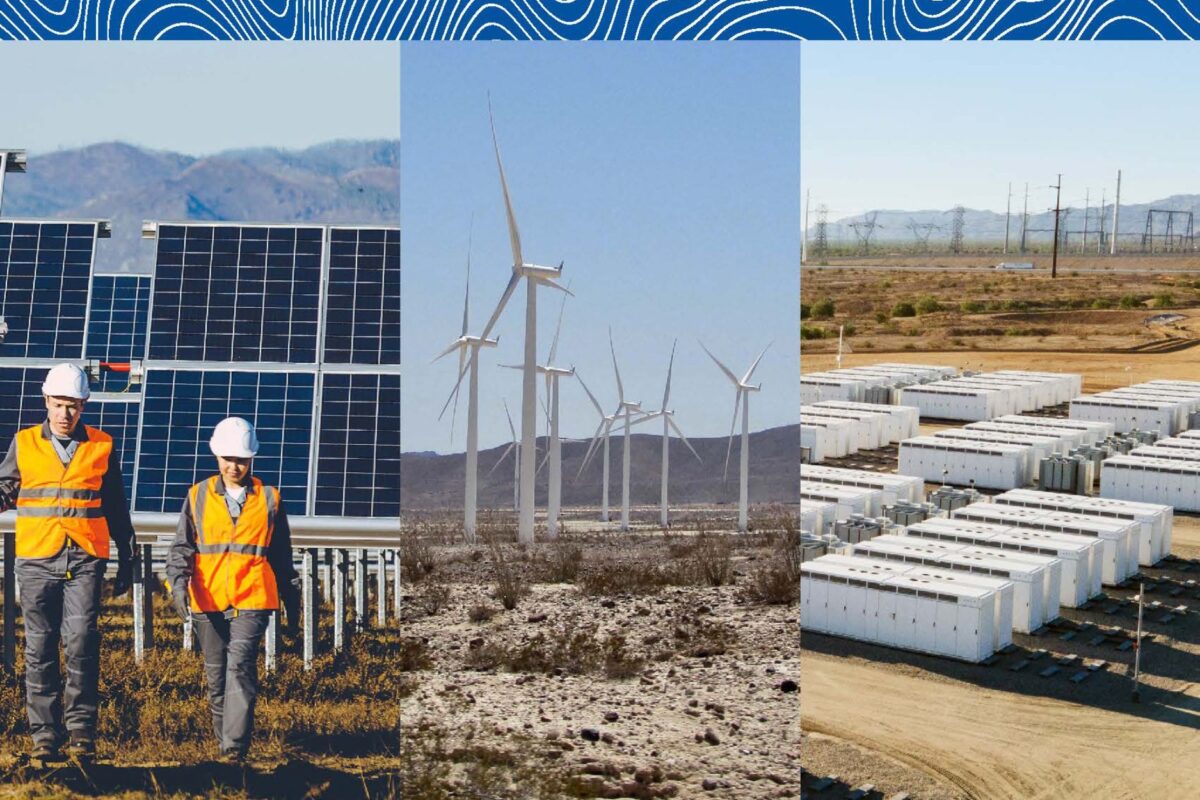
E3 has seen the largest barriers to renewable energy and storage development expand beyond technical and economic considerations to include complex social and institutional challenges. We help state and local governments, public agencies, developers, advocacy organizations, and academic institutions identify these barriers and develop practical strategies, processes, and tools to address them.
Our work addresses permitting systems that were not designed for the current scale and pace of energy infrastructure development. Common challenges include lengthy or fragmented review processes, competing demands for land, community opposition, restrictive zoning regulations, and limited staff capacity or technical expertise. E3 combines decades of energy planning experience with stakeholder engagement, geospatial analysis, economic modeling, and implementation support to help clients navigate these challenges.
Key E3 capabilities include:
- Permitting process assessment, best practices, and recommendations: E3 evaluates existing siting and permitting processes, identifies sources of delay and uncertainty, and recommends practical improvements. We engage agency staff, developers, community representatives, and other stakeholders to build a comprehensive understanding of challenges faced within existing processes. Our recommendations include best practices and targeted opportunities for process improvements.
- Tools and resources to support informed permitting decisions and implementation: E3 develops tools that help planning staff and other decisionmakers review projects consistently and transparently. These resources include technology-specific model ordinances, application checklists, community benefit guides, guidance for tribal considerations, and fact sheets and other educational materials for public officials and community members.
- Land use and siting analysis: E3 uses geographic information system analysis to identify areas suitable for renewable energy and storage development based on environmental conditions, land use restrictions, infrastructure access, resource quality, and public policy requirements. We evaluate how setbacks, exclusions, and alternative land use policies affect development potential and examine proximity to transmission, substations, and areas of grid need.
- Quantification of permitting cost and timeline impacts: E3 quantifies the effects of permitting requirements, mitigation measures, fees, taxes, community benefits, and project delays on development costs. This analysis helps clients understand which requirements have the greatest financial effect and how permitting timelines influence project viability.
- Integration of siting and permitting constraints into power system planning: E3 connects real-world development conditions with long-term resource planning. We translate permitting timelines, land constraints, and other development risks into capacity expansion model assumptions, including annual build limits, resource costs, and first available year inputs.
- Evaluation of policy and implementation opportunities: E3 assesses policies that can improve project feasibility and community acceptance, including agrivoltaics and other forms of dual land use, community benefit structures, and tax policy. Our work evaluates both practical feasibility and the policy conditions needed for successful implementation.



 Amber Mahone
 Lakshmi Alagappan